Small-space living 3 min read
The place something belongs starts with how you use it
Things used together can travel as a kit; things used separately need their own way out.
Read the guideDesk setups & small-room ideas
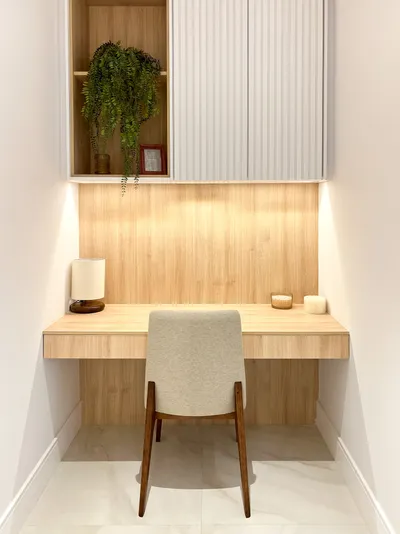
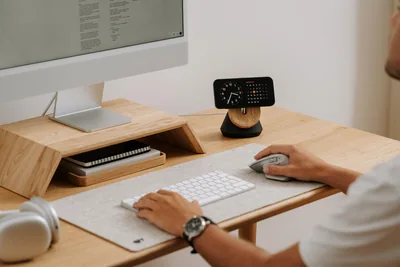
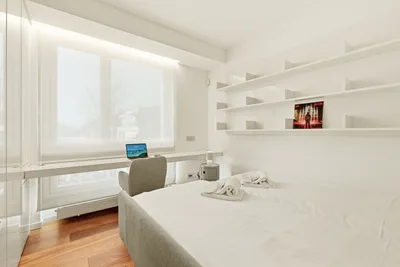
One surface can hold a working day and still belong to the evening. Explore desk layouts that change with the task, kits that lift away and storage with a clear way out.
Free tools • No account
Typing, meetings & projects
“My laptop takes up the space I need for writing.”
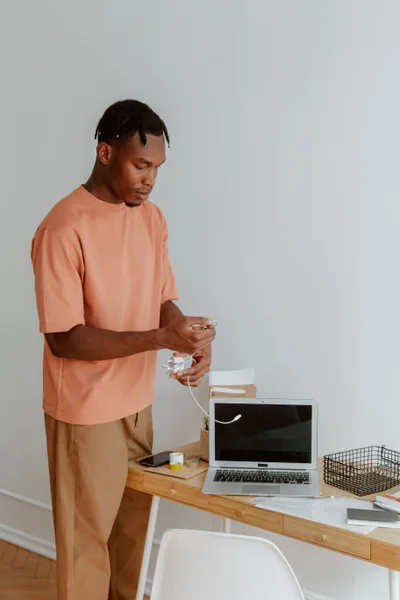
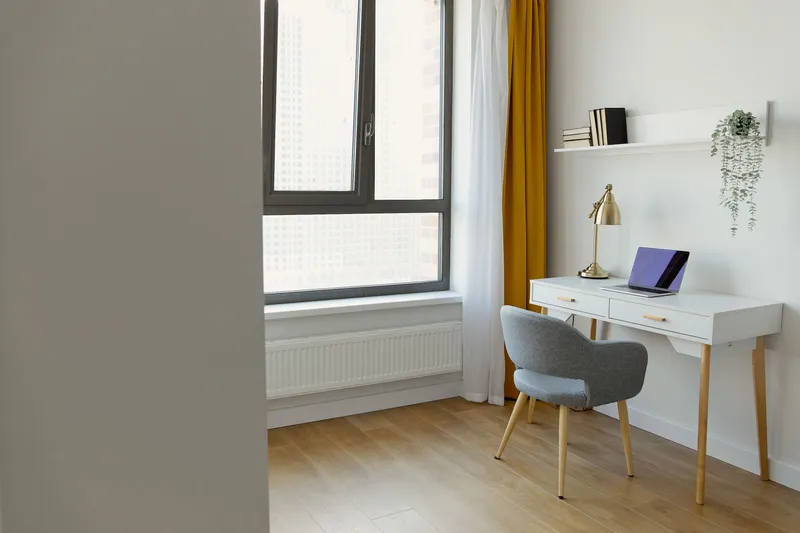
A nearby shelf can hold the closed laptop during handwriting and the notebook during typing. The same clear area takes a different role as the task changes.
Your notebook gets a useful writing area when the laptop has a safe place off the desk.
In your room: Two paper outlines can stand in for the laptop and open notebook. The layout includes a safe, reachable place for whichever one is waiting.
Related product examples →Task-specific spatial arrangements are discussed by Kirsh. These two desk modes are our practical application, not a tested productivity system. Check both your working position and the storage location.
Research context: Kirsh, 1995 ↗“A meeting starts, and I am still looking for my things.”
A notebook and headphones can share a tray because they serve the same meeting. The group has one place to leave from and one place to return to.
Objects can belong together because you use them for the same task. You have one meeting kit to find and put away.
In your room: An existing tray can stand in for a meeting kit, with the essentials used in your own calls.
Related product examples →Grouping objects around an activity is discussed by Kirsh. The meeting kit is our practical application. Keep shared supplies separate if several routines need them; a kit should not cause unnecessary duplicate purchases.
Research context: Kirsh, 1995 ↗One meeting one kit
The kit leaves together.
It returns to one place.
“The folder I need is always under another one.”
A folder gathers the pages of one project. Supported side-by-side positions give the separate projects their own routes out.
Pages for one project stay together. Separate projects can be taken out independently.
In your room: The folder opened most often makes a useful example: its route out shows which other folders need to move.
Related product examples →This is an illustrated access comparison, not a measured time saving. In the stack shown, two folders are above A; in the upright arrangement A can be removed separately. Check shelf height, folder support and space to grip and pull it out.
The next task is in Project A.
B and C move
before A comes out.
A comes out.
B and C stay.
Photos, tools & reading
Photo stories
A hook where a bag arrives. Light beside a writing hand. Six photographs, with the arrangement explained.
Explore the photographs →Interactive tools
Check storage fit and pull-out space, compare access to an item, or try a different light position.
Choose a tool →Ten guides
The route a box takes out. The space behind a monitor arm. The place an unfinished project can wait.
Browse the guides →Looking for a particular tray, stand or holder? Browse the product examples ↗
The reading room
10 short reads.
A different mechanism in each.
10 guides
Small-space living 3 min read
Things used together can travel as a kit; things used separately need their own way out.
Read the guideSmall-space living 3 min read
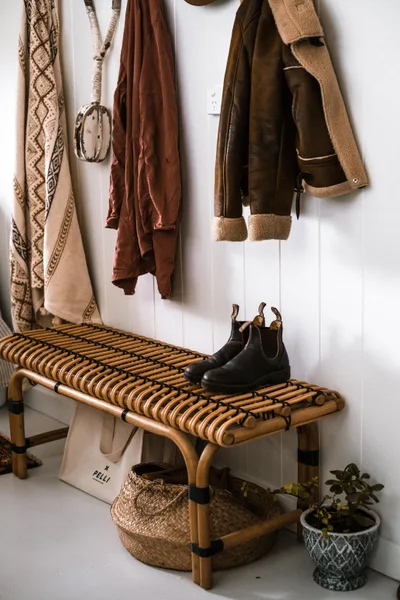
An arrival spot and an outgoing spot serve different moments, even when they share one small shelf.
Read the guideSmall-space living 3 min read
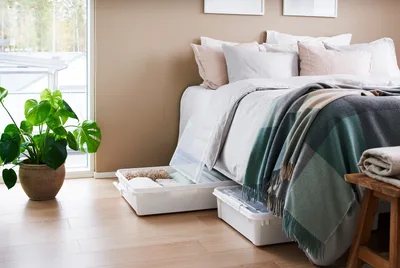
A label on the visible edge and room to remove the lid turn hidden volume into reachable storage.
Photo: SmartStore Bedroller / Orthex Group.
Read the guideSmall-space living 3 min read
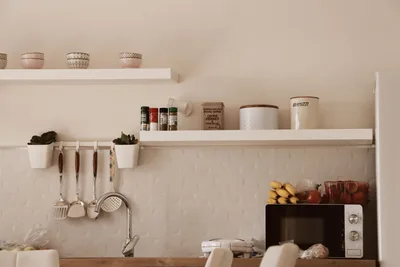
A shelf can hold both a small display and contained working supplies; each has a different reason to be visible.
Read the guideSmall-space living 3 min read
Where an item keeps landing can reveal which part of its return route needs less effort.
Read the guideDesk setup 3 min read
A laptop and a notebook do not always need permanent places beside each other.
Read the guideDesk setup 3 min read
Cables that move together can share a bundle; the daily charger needs an easy way to leave.
Read the guideDesk setup 3 min read
The arm can remove a stand footprint while its joints still need their own moving space.
Read the guideDesk setup 3 min read
The kit stores the objects; a next-step note stores the place to begin again.
Read the guideDesk setup 3 min read
Moving a lamp across your writing hand can change the shadow without changing the desk.
Read the guideNo matching guides.